
Healing the Earth
25/06/2025 | Saameer Athavale
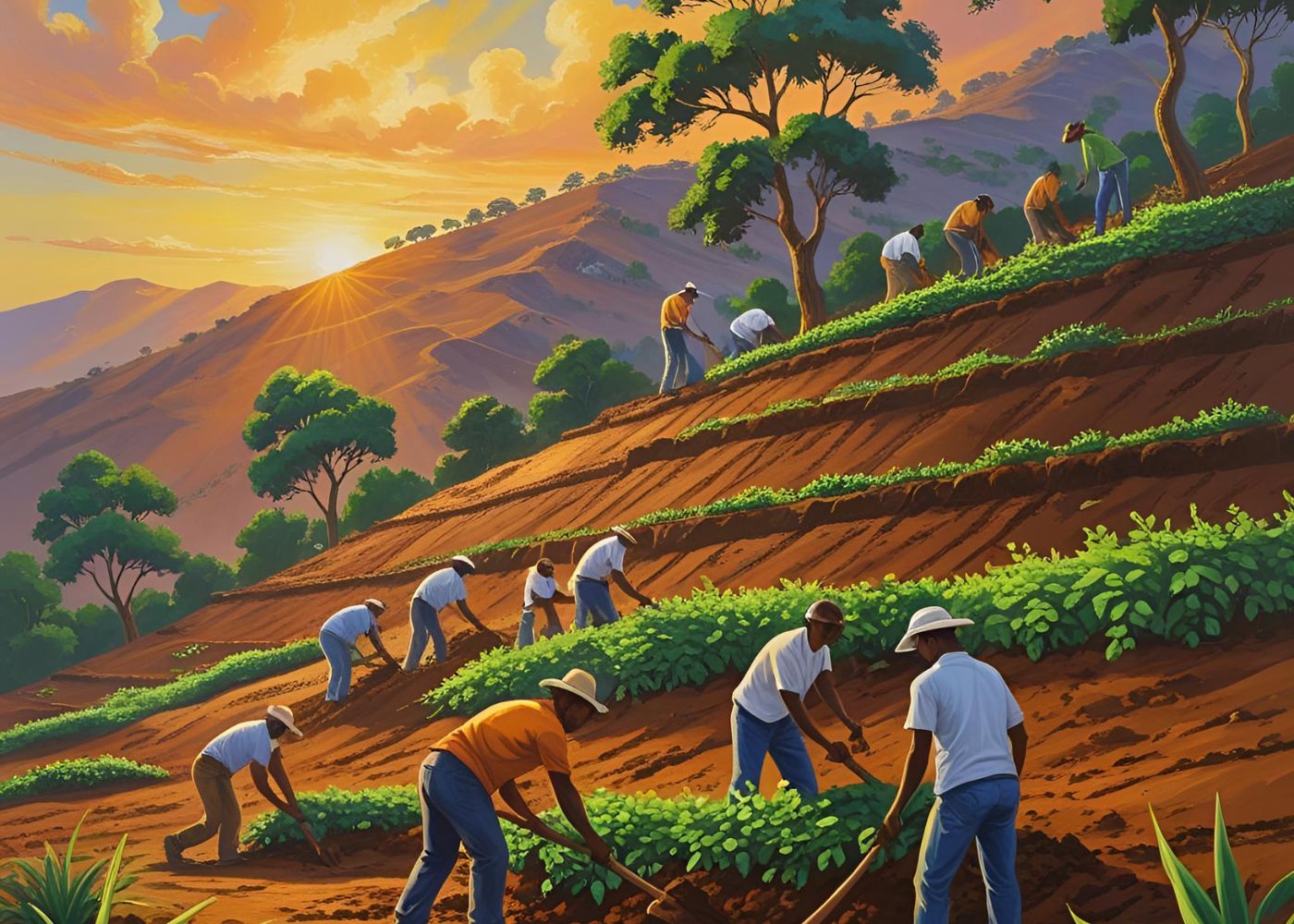
Soil is more than just the ground beneath our feet—it's the foundation of life and livelihoods, especially in rural and tribal India. Yet today, India is losing its soil faster than it can regenerate it.
Soil degradation, erosion, and nutrient loss are silently eating away at our food systems, our water tables, and our future. At Shop for Change Fair Trade, we see this crisis not just as an environmental concern, but as a livelihood emergency—especially for the smallholder and tribal farmers we serve.
That's why soil conservation through regenerative agriculture is at the heart of our work.
What Is Regenerative Farming?
Unlike conventional farming, which often depletes natural resources, regenerative farming restores them. It focuses on rebuilding soil health, increasing biodiversity, and enhancing the ecosystem—all while improving farm productivity.
We work with farmers to promote practices such as:
- Zero-tillage and minimal soil disturbance
- Natural mulching and cover cropping
- Organic inputs instead of chemical fertilizers
- Crop rotation and intercropping to restore soil balance
- Use of local biodiversity to revive soil microbiomes
At the core of our regenerative work is the Saguna Regenerative Technique (SRT)—a no-till method that helps retain topsoil, improve water retention, and reduce input costs while increasing yields.
Vetiver: Nature’s Engineer
One of our most effective and low-cost interventions is the use of vetiver grass for soil conservation. Planted along water bodies and contour lines:
- Vetiver roots grow up to 3 meters deep, binding the soil and preventing erosion
- It aids in groundwater recharge and stabilizes embankments
- It works as a natural barrier against run-off, protecting nutrient-rich topsoil
In areas like Jawhar (Maharashtra), we’ve combined vetiver bioengineering with digital tools like geo-tagging and environmental dashboards to monitor long-term impact.
Why This Matters for Farmers
Conserving soil isn’t just good for the environment—it’s a game changer for farmers.
- Higher productivity on the same land, with lower input costs
- Healthier crops and better yields due to richer, balanced soil
- Increased resilience to climate change, especially erratic rainfall
- Reduced dependency on chemical fertilizers and external inputs
- Long-term sustainability of the land as a productive asset
Real Impact, Real Stories
Farmers trained in regenerative methods have seen results within one season. For example, after adopting SRT and vetiver-based bunding, some of our tribal farmers reported:
- 30–50% increase in yield
- Reduced water usage by up to 40%
- Better soil texture and structure
- Decreased pest issues and increased crop resilience
These aren’t one-off success stories—they are part of a growing shift toward climate-smart, soil-friendly agriculture led by the very communities that have been historically left behind.
Soil Health = Nation’s Health
If we want a food-secure, climate-resilient, and economically strong India, we must start from the ground up—by restoring our soil.
At Shop for Change, our commitment is not just to grow crops, but to regrow trust, fertility, and futures—one farm, one community at a time.