From Seasonal Farming to Sustainable Livelihoods Through Tree Plantation
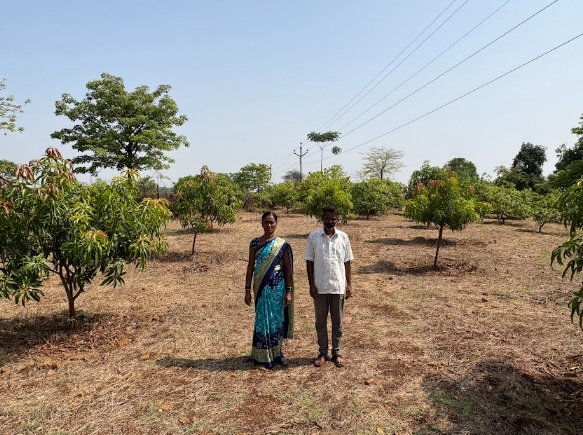
Farmer Name : Mr. Raghunath Devram Bhusara
Village : Bharsatmet, Jawhar
Intervention Supported by : Shop for Change Fair Trade with support from LTM (2020–2021)
Born and raised in the tribal village of Bharsatmet in Jawhar, Mr. Raghunath Devram Bhusara spent his childhood watching his parents work tirelessly in the fields just to provide two meals a day for the family. Like many tribal farming families, life was uncertain and completely dependent on seasonal agriculture and daily wage labour. With limited educational and livelihood opportunities in the village, Raghunath started working as a labourer at a young age whenever work was available. Those difficult years taught him resilience, responsibility, and the importance of hard work.
After marriage, his responsibilities grew even further. Along with supporting his own household, he also took responsibility for caring for his late brother’s children and supporting their education. His wife, Mrs. Devki Bhusara, stood beside him through every hardship, supporting both household responsibilities and farming work. Their son, Bhushan, and daughter-in-law, Kavita, continue to remain connected with farming, while their married daughter, Ashwini, lives with her family in another village in Jawhar. For many years, the family survived mainly on seasonal cultivation of rice and nachni (finger millet). However, the income from these traditional crops was never enough to meet the growing needs of the household. Farming remained uncertain and dependent on rainfall, forcing the family to constantly worry about their future and financial stability.
Despite the struggles, Mr. Bhusara always believed that farming could provide a dignified and secure future if supported with the right guidance and opportunities. In 2020, his life began to change when he connected with the field team of Shop for Change Fair Trade through the LTM-supported plantation initiative. Through the support of LTM and the continuous handholding provided by Shop for Change Fair Trade, Mr. Bhusara received saplings, technical guidance, and long-term support to develop a diversified tree plantation on his farm. More importantly, the initiative gave the family hope and confidence to invest in farming not just for survival, but as a sustainable livelihood for future generations.
Under the initiative, Mr. Bhusara received a total of 152 saplings supported by LTM, including 47 cashew plants, 60 mango plants, 16 jackfruit plants, 9 guava plants, 2 sapota plants, and 18 acacia plants. The plantation was designed not only to increase future income but also to strengthen biodiversity, improve soil conservation, and create climate resilience within the village.
During the initial years, both Raghunath and his wife worked tirelessly to nurture the plantation. They watered the saplings regularly, protected them from animals, and cared for every plant with patience and dedication. For the first two years, the family continued maintaining the plantation without expecting immediate returns, believing that one day the trees would secure a better future for their children.
Their patience slowly began to bear fruit. From the third year onwards, the plantation started generating income and gradually became a reliable source of livelihood for the household. What once looked like small saplings slowly transformed into a green and productive farm filled with opportunity and hope. Among all the plantation crops, cashew cultivation emerged as one of the most promising income sources for the family. This year, Mr. Bhusara sold nearly 1 quintal (100 kg) of cashew produce to Ecovibe Krishi producer company ltd.Farmer Producer Organization (FPO), a farmer-owned group company formed to collectively support farmers with better market access, fair pricing, and direct linkages with buyers and cashew companies.
Earlier, Mr. Bhusara sold his produce in local markets where traders and middlemen controlled prices, often leaving farmers with low and fluctuating income. However, through ECOVIBE, he was able to directly connect with buyers without intermediary involvement, ensuring greater transparency and improved profits. During the season, Mr. Bhusara preferred selling his cashew harvest to Ecovibe Krishi Producer Company Ltd. rather than the traditional local market. This decision was driven by the transparent pricing and the elimination of middlemen who previously controlled the value of his hard work.
By choosing the FPO, he was able to secure a premium rate and ensure that the full value of his 1 quintal sale directly benefited his household. The table below illustrates why this preference was a strategic financial move for his family:
Cashew Sale Financial Comparison: Mr. Bhusara
| Metric | Traditional Local Market (price) | Ecovibe Krishi producer company ltd. | The FPO Advantage |
|---|---|---|---|
| Market Price (per kg) | Rs. 155 | Rs. 165 | + Rs. 10 / kg Premium |
| Quantity Sold | - | 100 kg | — |
| Yield Share (%) | 0% (Market Avoided) | 100% of Harvest | Secure Direct Channel |
| Actual Earnings | Rs. 15,500 (potential) | Rs. 16,500 | Rs. 1,000 Net Gain |
| Revenue Contribution | Estimated Baseline | Enhanced | Enhanced Family Income |
This preference resulted in a 6.45% increase in total revenue for the same amount of labor. For Mr. Bhusara, this "FPO Advantage" represents more than just a higher price; it is a step toward long-term financial security and a more sustainable livelihood.
The additional income generated through plantation farming has significantly improved the family’s financial condition over the last two years. Today, the family feels more financially secure and hopeful about the future. Encouraged by the positive outcomes, Mr. Bhusara now plans to further expand cashew cultivation and continue investing in sustainable farming practices.
Beyond income generation, the plantation has also improved greenery around the farm, strengthened soil health, and created a more sustainable farming ecosystem. The diversified plantation provides long-term livelihood security while also contributing to environmental conservation within the community.
“Earlier our farming supported us only seasonally, and income was always uncertain. Today, the tree plantation has started giving us returns and confidence for the future. We are thankful to Shop for Change and LTM for supporting us and showing us a new path through farming.” shared Mr. Raghunath Bhusara.
The journey of Mr. Raghunath Bhusara is a powerful example of how long-term support, community-based interventions, and sustainable farming initiatives can transform rural lives. Through the support of LTM and the continuous guidance of Shop for Change Fair Trade, a family once dependent only on seasonal farming is now gradually moving towards stable and sustainable livelihoods. Today, the plantation on Mr. Bhusara’s farm stands not only as a source of income, but also as a symbol of resilience, dignity, environmental stewardship, and hope for future generations.