The Roots of Prosperity : The Story of Mr. Vilas Shiva Awtar
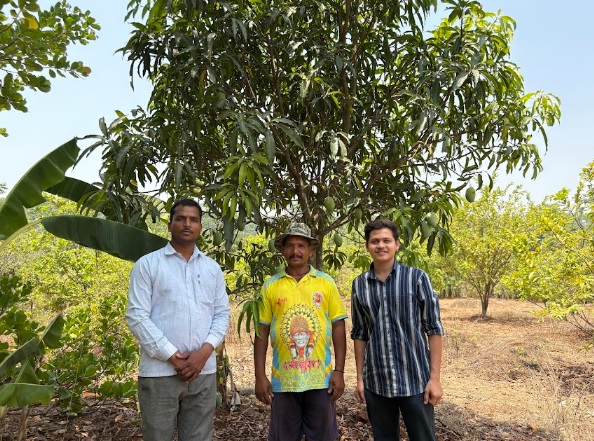
Farmer Name : Mr. Vilas Shiva Awtar
Village : Aalechimet, Jawhar
Intervention Supported by : Shop for Change Fair Trade with support from LTM
Born and brought up in the tribal village of Aalechimet, Mr. Vilas Shiva Awtar spent most of his life struggling to support his family through farming and daily wage labour. Growing up in a joint family with very limited resources, life was full of hardships and uncertainty. To meet the family’s daily needs, Vilas often travelled outside the village for labour work, staying away from home for an entire week and returning only during holidays. The income he earned was barely enough to sustain the household. Despite these struggles, Vilas remained determined to build a better future for his children. Through years of sacrifice and hard work, his dream slowly began to take shape. Today, one of his sons proudly serves in the Indian Army, while his other children work as teachers in schools in Jawhar. Alongside their professions, the family continues to stay connected to farming and agriculture. Vilas also takes care of his elderly parents, ensuring they live comfortably with the family.
A major turning point in Vilas’s life came in 2019 when he connected with the team from Shop for Change Fair Trade through the LTM-supported tree plantation initiative. Inspired by the vision of sustainable farming and environmental conservation, he decided to plant trees on his farmland. Initially, the saplings were planted along the boundaries of his farm, but due to the distance and limited care, many of the plants struggled to survive.
Realizing the importance of regular monitoring and proper maintenance, Vilas shifted the plantation closer to his farming area where he could personally nurture the saplings. With continuous guidance and technical support from the Shop for Change team, he carefully watered, protected, and maintained the plantation with dedication and patience. Over the years, the plantation gradually transformed Vilas’s farm into a thriving green landscape filled with diverse trees and crops. With plant saplings provided under the LTM-supported initiative, he successfully developed a plantation of nearly 148 trees on his land, creating both environmental and livelihood benefits for his family. His farm now includes 30 cashew trees, 10 mango trees, 16 guava trees, 6 jackfruit trees, and 57 teak trees planted for long-term financial security. Along with these, he has also nurtured native species such as Java Plum (Jamun), Custard Apple, and Acacia, helping improve biodiversity and ecological balance around the farm.
The plantation has become much more than just a source of greenery for Vilas and his family. While cashew cultivation has already started generating income, the mango, guava, and jackfruit trees are expected to provide additional seasonal earnings in the coming years as the trees mature further. These fruit-bearing trees will help diversify the family’s income and reduce dependency on a single crop. The teak plantation, on the other hand, is seen by Vilas as a long-term investment and security for the next generation, offering future financial support during times of need.
The growing plantation has also improved the environmental condition of the farm by increasing soil moisture, creating shade, and enhancing biodiversity around the land. What was once a dry and uncertain farming space has slowly turned into a productive and sustainable farm ecosystem. For Vilas, the trees symbolize stability, hope, and a secure future for his children and grandchildren.
Alongside tree plantation, Vilas continued cultivating cashew on his farm. This year, his farm produced nearly 2.5 quintals of cashew, marking an important milestone in his farming journey. Traditionally, farmers in the village sold their produce in local markets where prices were controlled by middlemen. Wanting to explore better opportunities, Vilas decided to sell part of his produce through the Ecovibe Krishi producer company ltd.Krishi producer company ltd.Krishi producer company ltd.
"The transformation of Vilas’s livelihood is a continuous process of empowerment. By moving away from a dependency on local middlemen and adopting the FPO's collective bargaining model, Vilas has shifted from subsistence farming to a sustainable business cycle. This consistent income has brought a newfound sense of security and happiness to his family."
The table below highlights the immediate financial outcomes of this ongoing transition:
| Metric | Traditional Local Market | Ecovibe Krishi producer company ltd. | The FPO Advantage |
|---|---|---|---|
| Market Price (per kg) | Rs. 155 | Rs. 165 | + Rs. 10 / kg Premium |
| Quantity Sold | 150 kg (60%) | 100 kg (40%) | – |
| Yield Share (%) | 60% of Harvest | 40% of Harvest | – |
| Actual Earnings | Rs. 23,250 | Rs. 16,500 | Higher Rate Realization |
| Revenue Contribution | 58.5% of Total | 41.5% of Total | Enhanced Family Income |
Compared to last year, Vilas shared that his earnings from farming have increased, bringing greater financial stability and confidence to the family. The additional income from cashew sales has helped improve household security and encouraged him to continue investing his time and effort into sustainable farming practices. He is also hopeful that as the mango, guava, and jackfruit trees mature further, they will provide additional seasonal income and strengthen the family’s livelihood in the coming years.
Through the support of Ecovibe Krishi producer company ltd.Krishi producer company ltd.and Shop for Change Fair Trade, Vilas realized that farmers can secure better prices, reduce dependency on middlemen, and strengthen their bargaining power by working together. The increased income and positive farming results have motivated him to further expand and maintain his plantation with dedication.
“Earlier, we struggled only to meet our daily needs. Today, because of plantation support and better farming opportunities, we are able to think about the future of our land, our children, and the next generation,” says Mr. Vilas Shiva Awtar.
Today, Vilas is not just a farmer but a symbol of resilience, determination, and hope for his community. From working as a daily wage labourer to building a sustainable farm through tree plantation and successful cashew cultivation, his journey reflects how timely support, community-based initiatives, and personal dedication can transform rural lives. He continues to nurture his trees and crops with pride, believing they will become a lasting asset for his family, village, and the environment for generations to come.