Harvesting Hope Through Water Conservation
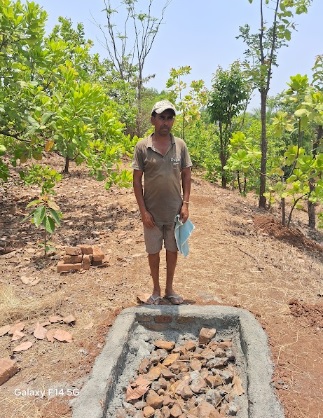
The Journey of Vilas Rama Bhoye and Family
In the remote tribal hamlet of Boricha Mala in Jawhar, Mr. Vilas Rama Bhoye and his wife, Mrs. Vijaya Vilas Bhoye, have spent most of their lives working tirelessly to support their family. Like many tribal households in the region, their livelihood depended on seasonal farming and daily wage labor. During the monsoon, they cultivated traditional crops on their small piece of land, but once the season ended, both had to search for labor wherever available to meet household expenses and educate their children.
Despite years of hardship, the couple remained deeply committed to securing a better future for their family. Their daughter, Ashwini Vilas Bhoye, is now married. Their son, Sagar Vilas Bhoye, completed his 12th standard two years ago, while their younger daughter, Bhavana Vilas Bhoye, successfully completed her 12th standard this year with good marks — a proud achievement for the family and a reflection of the parents’ continuous sacrifices and determination.
Although the family owned agricultural land, farming alone was never sufficient to provide stable income. The rocky terrain, poor soil moisture, and recurring water scarcity made cultivation difficult and uncertain. Yet Vilas always believed that if his land received the right support, it could one day become a dependable source of livelihood for the family.
Three years ago, this hope slowly began turning into reality when Shop for Change Fair Trade supported Vilas in developing a sustainable fruit plantation on his farm. Under the initiative, he received high-yield cashew, mango, and jackfruit saplings along with organic fertilizers and essential farming support.
For Vilas and Vijaya, this plantation was much more than agricultural assistance — it represented the possibility of gradually moving away from uncertain labor work and building a secure future through their own land. Together, the couple nurtured every sapling with immense care, patience, and dedication. Over time, the plantation began showing encouraging growth. As the cashew trees matured, Vilas could finally begin to see the possibility of earning regular income from farming.
However, one major challenge continued to threaten the plantation — severe water scarcity. During the summer months, the soil dried quickly, and Vilas constantly worried whether the young trees would survive. In the hilly landscape of Boricha Mala, rainwater would rapidly flow away during the monsoon without benefiting the farm for long. Recognizing this challenge, this year Shop for Change Fair Trade further supported Vilas with training and guidance on rainwater harvesting techniques. With this support, Vilas constructed a rainwater harvesting soak pit on his farm using carefully layered large, medium, and small stones designed to capture and conserve rainwater underground. Vilas personally devoted two full days of labor to building the structure himself. He shared that earlier, most of the rainwater simply washed away from the farm, but now the soak pit will help retain soil moisture and provide water to the tree roots for a much longer duration. This intervention is expected to strengthen groundwater recharge and improve the survival and growth of the plantation during dry periods.
Today, the plantation has already started delivering encouraging results. Last year, Vilas harvested and sold nearly 15 kg of cashews, and despite difficult weather conditions, he harvested another 10 kg this year. Though the plantation is still growing, it has already begun bringing hope, confidence, and greater stability to the family’s life.
Speaking about his journey, Vilas says:
“Earlier, after the farming season ended, both my wife and I had to depend on labor work for survival. Today, when I see these trees growing, I feel hopeful that our land will continue supporting our family in the future.”
The journey of Vilas Rama Bhoye and his family reflects how timely support, sustainable agriculture, and climate-resilient solutions like rainwater harvesting can help tribal farming families move from uncertainty toward resilience, dignity, and long-term livelihood security.